Fusion prostate biopsy

At Andrología Mallorca, we are at the forefront of diagnostic and therapeutic techniques in Urology. We are currently the only team in the Balearic Islands performing fusion prostate biopsies.

The urologist specialized in prostate cancer, Dr. Xavier Bonet, explains in detail what a fusion biopsy is and how at Andrología Mallorca we use it to achieve the most accurate diagnosis.
What is the fusion biopsy?

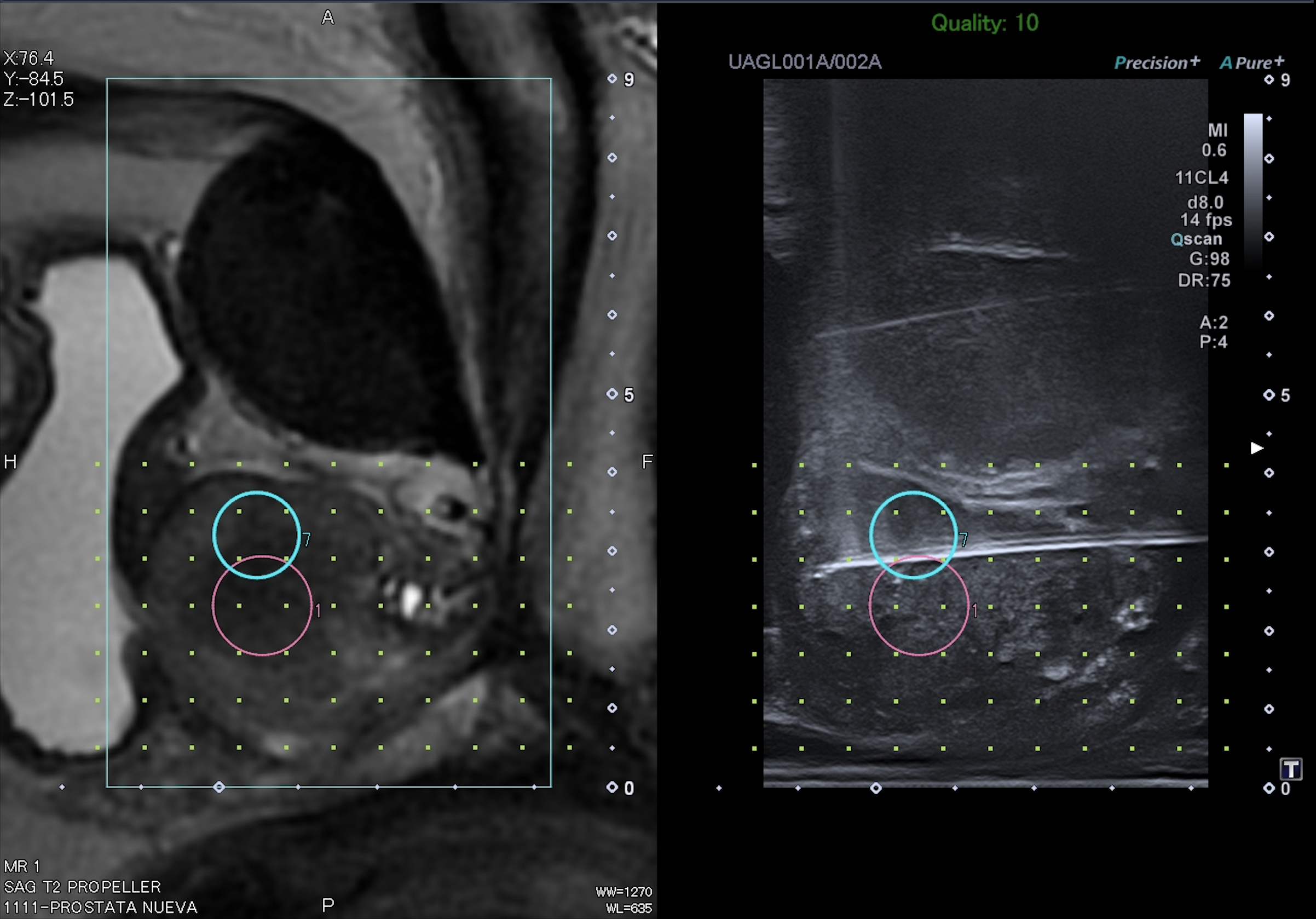
Imagen de las dos imágenes en tiempo de real de la ECO y la RMmp durante una biopsia por fusión

In recent years, multiparametric magnetic resonance imaging (mpMRI) has become a fundamental tool in prostate cancer diagnosis due to its higher resolution compared to ultrasound for detecting potential cancerous areas.

ECO/mpMRI fusion is a revolutionary technique that combines high-definition mpMRI images with ultrasound images in real-time.

In this way, during biopsies performed using ultrasound, mpMRI acts like a GPS, helping us to more precisely locate areas with the highest likelihood of detecting prostate cancer.

Questions about the ECO/RMmp fusion prostate biopsy

When is it indicated?

In the case of suspected prostate cancer due to elevated PSA levels, an mpMRI is performed by expert radiologists. If the presence of suspicious lesions is confirmed, a fusion ECO/mpMRI biopsy is recommended.

What does it involve?

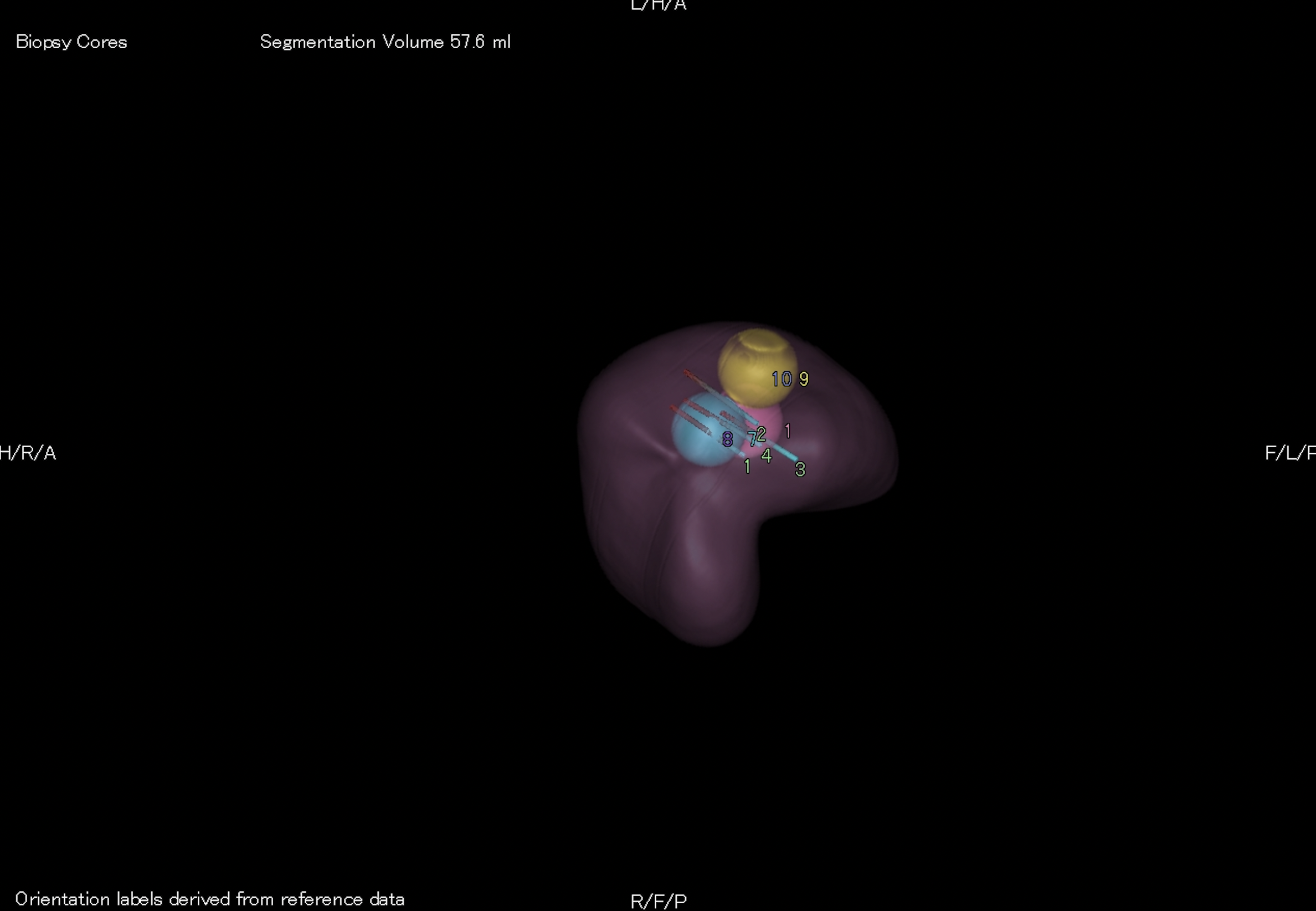
Using a computer system (fusion software), the mpMRI images are superimposed with the ultrasound (ECO) images in real time, known as image fusion. In this way, very precise coordinates can be assigned to each lesion, allowing for a highly accurate biopsy procedure.

How long does it take?

It takes 30 to 45 minutes (depending on the number of lesions).

How is it performed?

It is performed in the operating room under sedation and through the perineal approach (which, unlike the classic transrectal approach, drastically reduces the possibility of subsequent infection).

When are the results available?

The recovery is quick, and the biopsy results are received within 7-10 days. At this point, an individualized treatment plan is developed for each patient with an expert urologist.

What advantages does it have over the classic transrectal biopsies?

  • Clinical guidelines recommend it as the first option if available.
  • It is more precise: it detects 30-50% more aggressive tumors.
  • It detects tumors on the anterior side more easily.
  • It can be performed after a negative traditional biopsy if prostate cancer is still suspected.
  • It has fewer subsequent infections.
  • It is done under sedation and without discomfort for the patient.

Why perform a fusion biopsy?

Prostate cancer (CaP) is the most common malignant tumor among European men. In Spain, the incidence of CaP is estimated to be approximately 21.7%.

The classic method for its initial diagnosis was the performance of biopsies using transrectal ultrasound. However, it is an imperfect diagnostic technique due to its low sensitivity and the need for repeat biopsies in many patients.

For these reasons, international clinical guidelines now recommend performing fusion biopsies using multiparametric magnetic resonance imaging (mpMRI) if available.

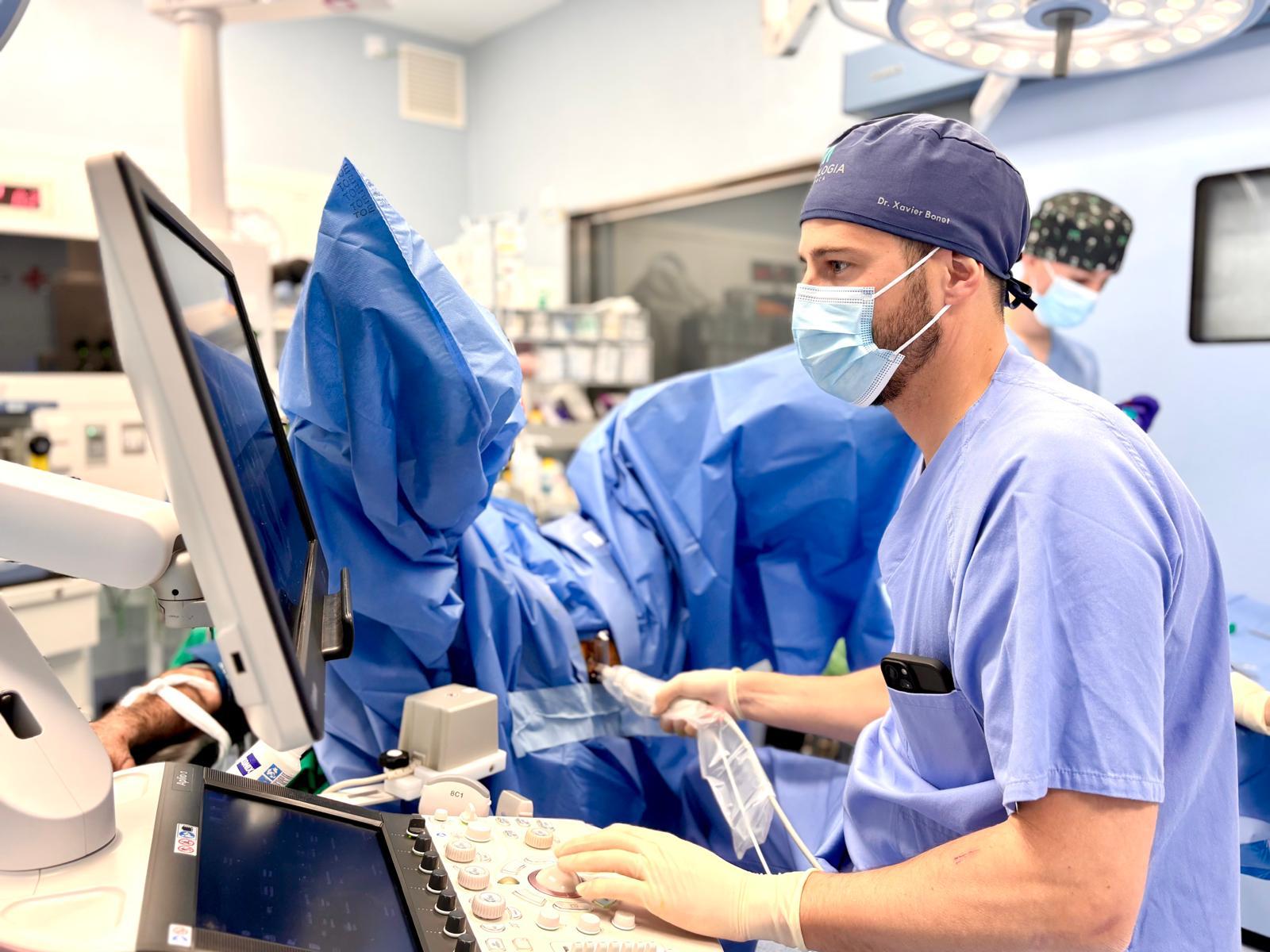
The Dr. Xavier Bonet explains to us in the operating room

Would you like more information about fusion prostate biopsy?

At Andrología Mallorca, we are the only team in the Balearic Islands performing this procedure. Feel free to contact us if you need personalized advice.
Privacy Overview

This website uses cookies so that we can provide you with the best user experience possible. Cookie information is stored in your browser and performs functions such as recognising you when you return to our website and helping our team to understand which sections of the website you find most interesting and useful.